Business operations platform
Operiq
Bookings, rosters, standards, feedback, commission and Malaysian statutory payroll, in one system.
Tell us your problem- Industry
- Spa and wellness
- Services
- Product strategy, UI/UX, web application, website
- Built with
- React, Supabase
- Status
- Running in production
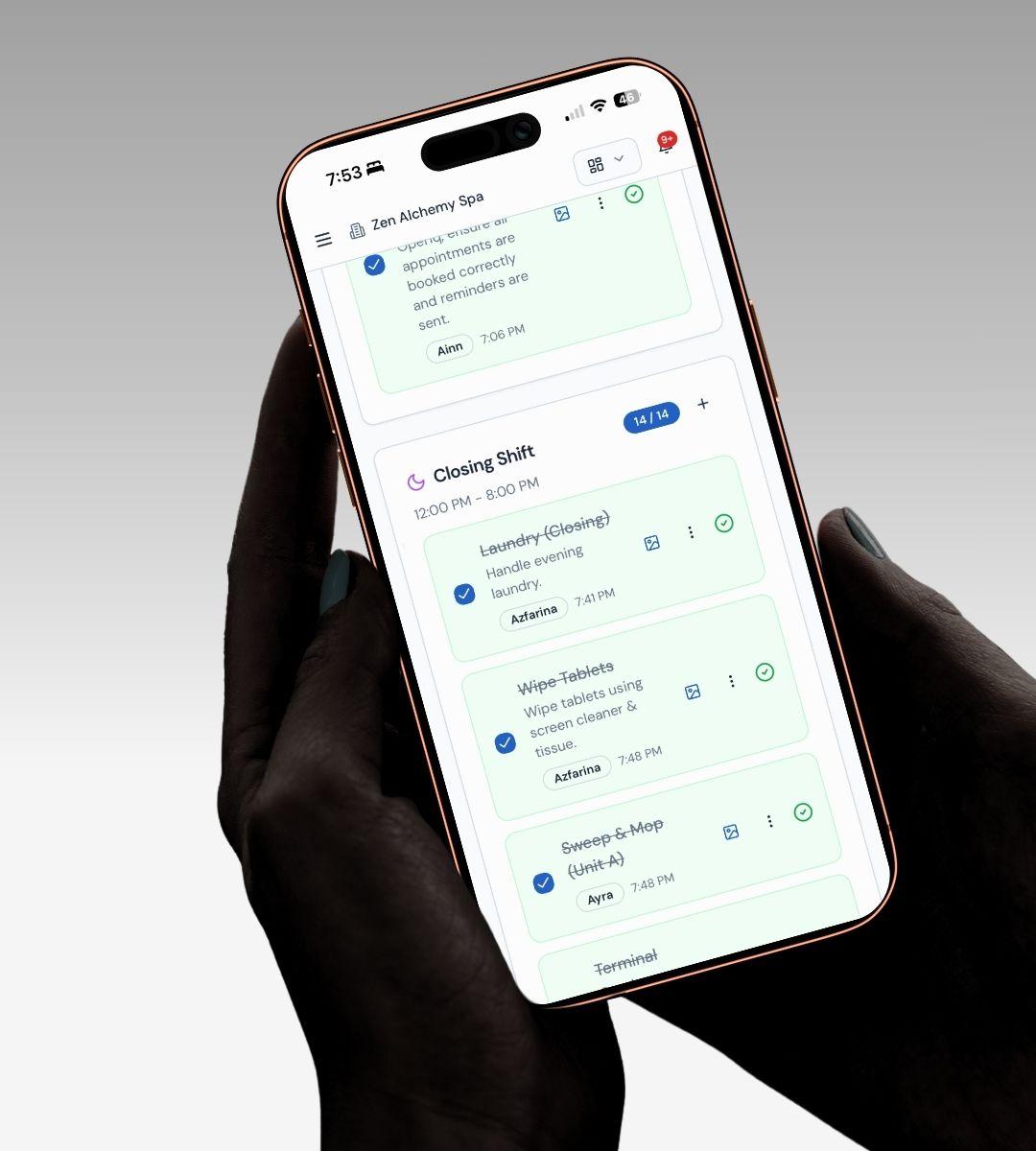
- Core operational layers connected
- 4
- Workforce, standards, customer experience and finance
- Operational source of truth
- 1
- Connecting what happens on the floor to what management sees
- Running in a real business
- Live
The context
One business, too many moving parts.
Bookings lived in one platform. Staff schedules were handled separately. Attendance, SOPs, customer feedback, leaderboard, commission and payroll all had their own processes.
At the end of every month, information had to be pieced together again wasting long hours. The bigger problem was not just admin. There was no single operational view connecting how the team worked, how customers experienced the service, and how the business was performing.
The challenge
The hard part of this software is not the booking screen.
Standards that hold up across every shift
A procedure written in a document is not the same as a procedure being followed. SOPs had to become part of the actual workflow — assigned by role, completed during shifts, and recorded when something was missed or violated.
Performance based on what actually happens
Staff performance could not rely only on sales or a manager’s opinion. Customer feedback, SOP compliance and operational behaviour all needed to contribute to a measurable performance system.
Payroll that understands the business
Commission changes depending on what was sold, discounts, packages and payment rules. Overtime depends on the roster and actual attendance. Employees and freelancers follow different payroll paths, while statutory contributions still have to reconcile correctly.
Designing around the workflow
Three people, three completely different screens.
A therapist checking their day, a receptionist taking a walk-in payment and a manager approving a payroll run need different things. Each screen shows what that person needs to finish the job in front of them, and nothing else.
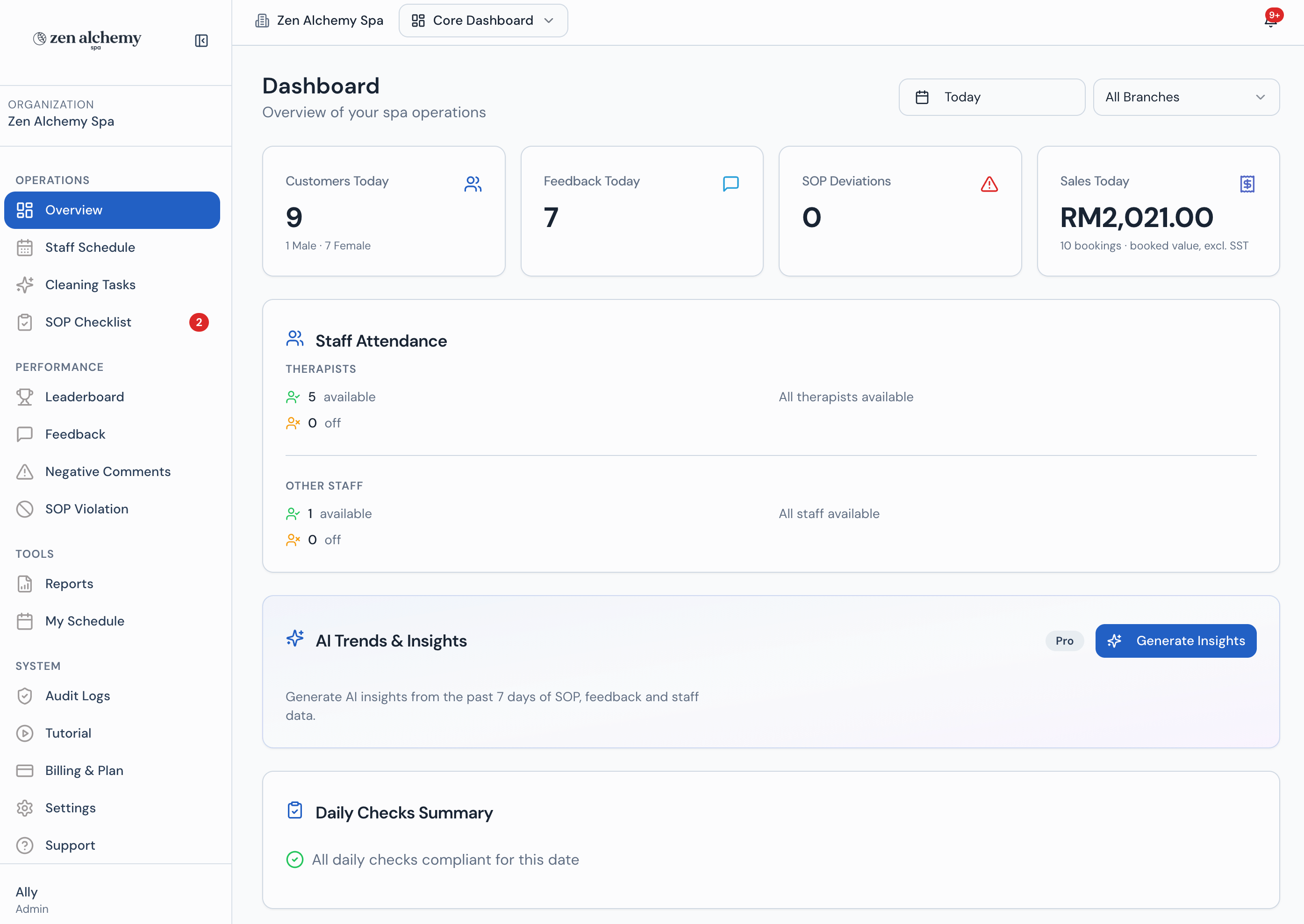
A manager starting the day: who is on, what came in, what was sold, and whether the daily checks were done. 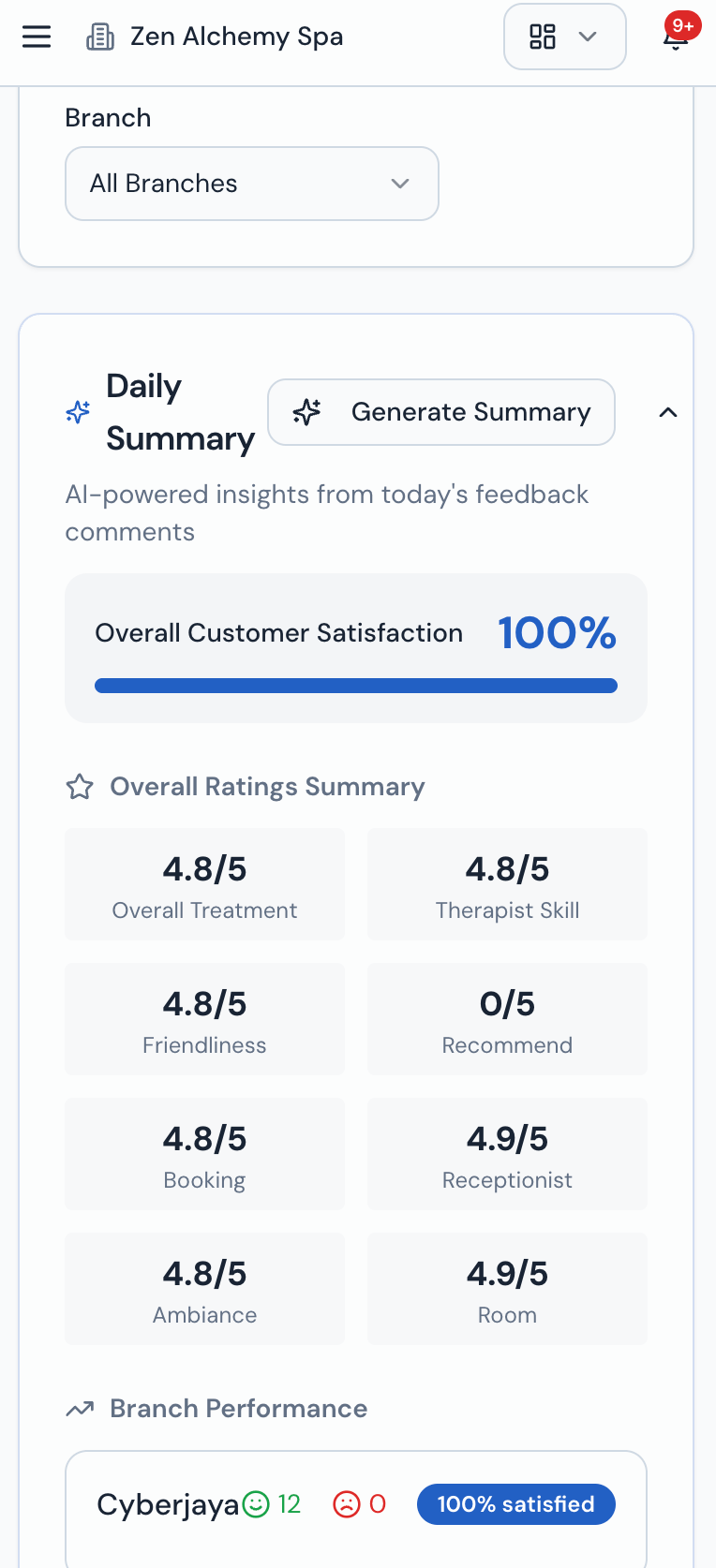
A manager reading the day’s feedback on a phone, rated by treatment, therapist and room. 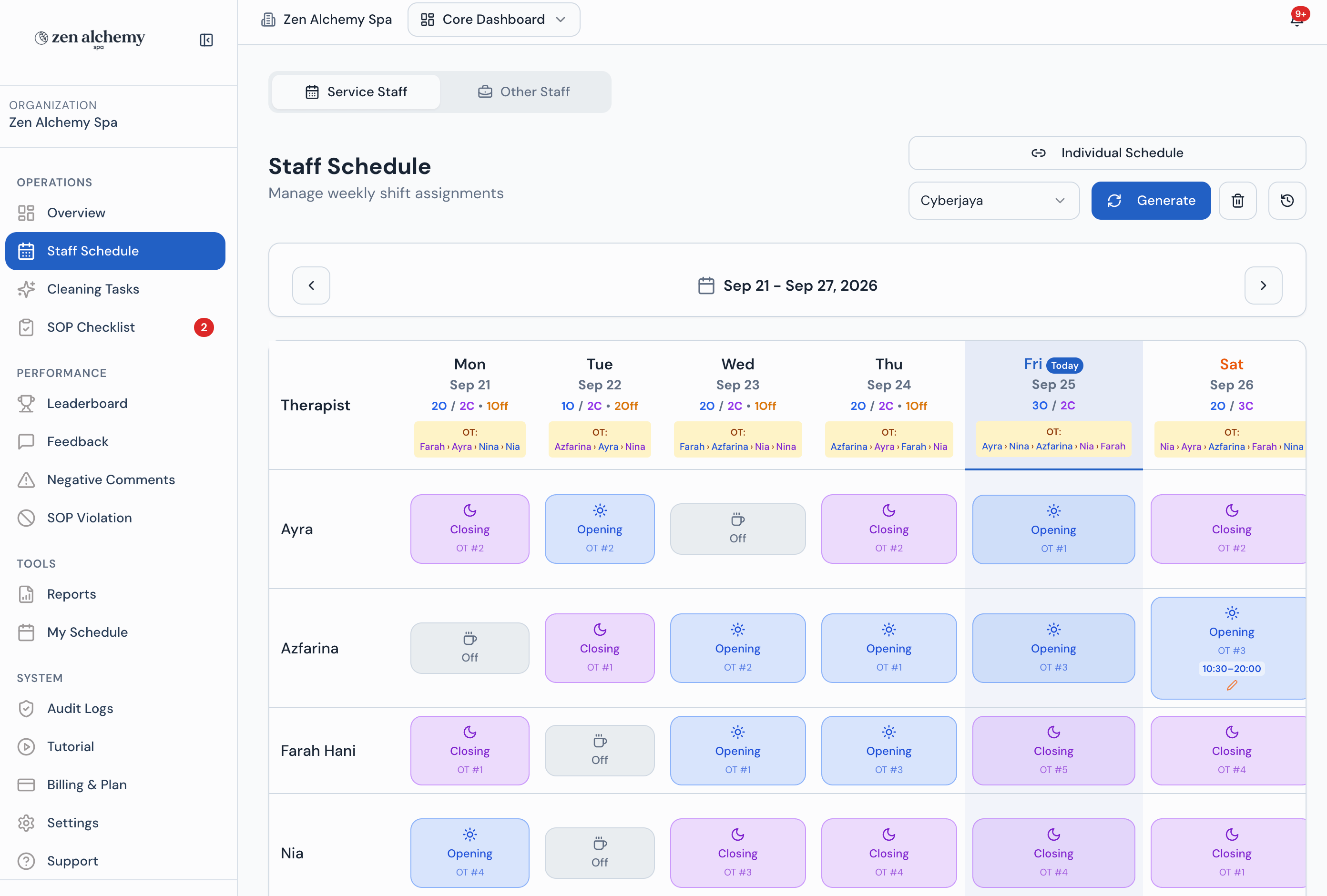
A manager planning the week: who opens, who closes, who is off, and who gets called first for overtime. 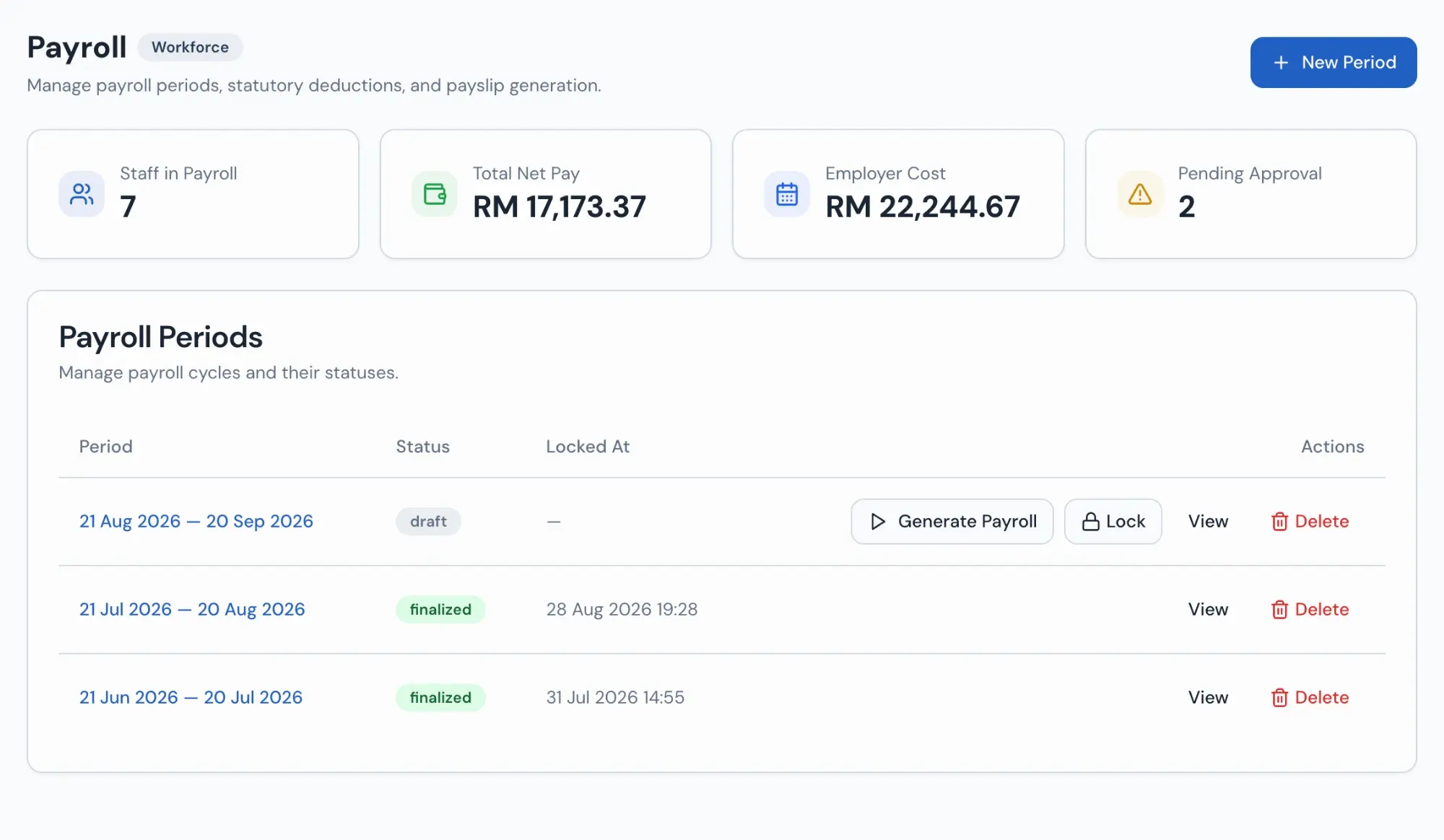
An admin closing the month: generating payroll for the period, then locking it once it is approved. 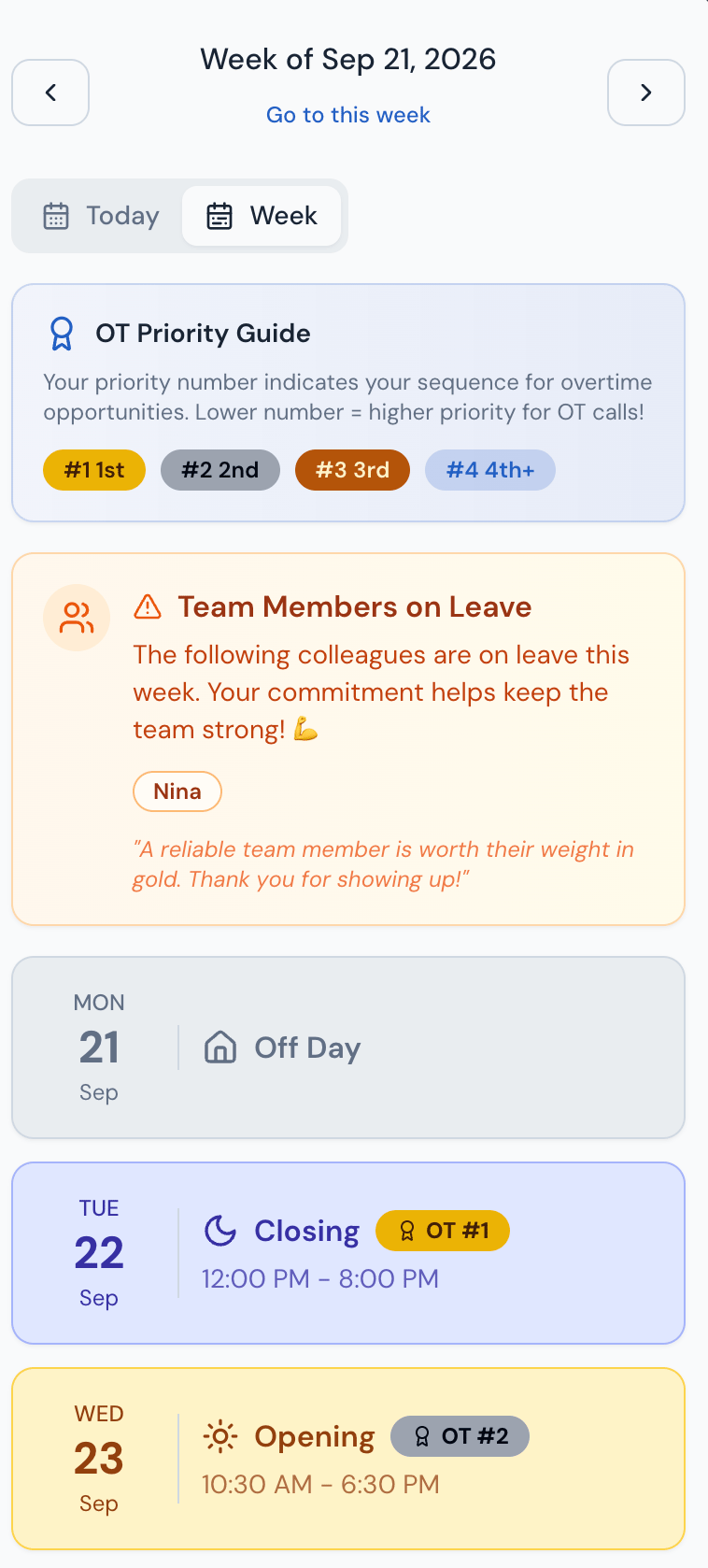
A therapist checking their week on a phone: shifts, hours and where they stand for overtime.
What we built
One system, end to end.
Bookings, workforce planning, attendance, SOP compliance, customer feedback, performance incentives, commission, payroll and statutory submissions — connected within one operating system.
Overtime from the real shift
Overtime is calculated from the roster and attendance record together, rather than simply using clock-out time. Break rules, roles, branches and company policies determine the final calculation automatically.
Rosters that start from coverage
Scheduling begins with the number and type of staff a branch actually needs. Instead of building a roster first and discovering gaps later, managers can plan around real operational coverage.
Points that reward better service
Staff earn points from signals that matter — including real customer feedback and SOP compliance. Those points feed into a leaderboard, turning service quality into visible progress, recognition and friendly competition.
SOPs that become part of the shift
Checklists are assigned according to role and responsibility, so every team member works from the same operating standard. Missed steps and SOP violations are logged against the employee and shift, making recurring issues easier to identify.
Feedback that shows where to improve
Customer feedback is captured inside the system and connected to the relevant branch and service experience. Instead of disappearing into WhatsApp messages or reviews, feedback becomes operational data that management can use to track improvements over time.
Commission and payroll from the same data
Sales, discounts, packages, attendance and commission rules flow into payroll without being reconstructed manually. Full-time employees and freelancers can follow separate calculation paths while still being managed within the same system.
Statutory files that actually pass
EPF, SOCSO, EIS and PCB exports have to meet exact submission requirements — including fixed-width records, zero-padded fields, line endings and reconciliation totals. Operiq generates the files from the same payroll data instead of requiring another manual process.
The result
What changed.
One system that runs the schedule, holds the standard across branches, and calculates commission, overtime and Malaysian statutory payroll — including the export files the government portals accept.
- 5 mins
- To close monthly payroll — down from 3 days
- < 1 min
- To build the weekly roster — down from 1 hour
- Instant
- Feedback reporting — down from a few days of gathering
Why this project represents Iterna
Start with how the business actually works.
Understand where information moves and where it stops. Find what’s being repeated by hand. Then build the system around the workflow.
And finish the last twenty per cent — the part a payroll officer, an auditor or a regulator has to accept — because that’s where software projects quietly fail.
Have something like this to build?
Tell us how your business works today. You don’t need a technical brief.
Tell us your problem